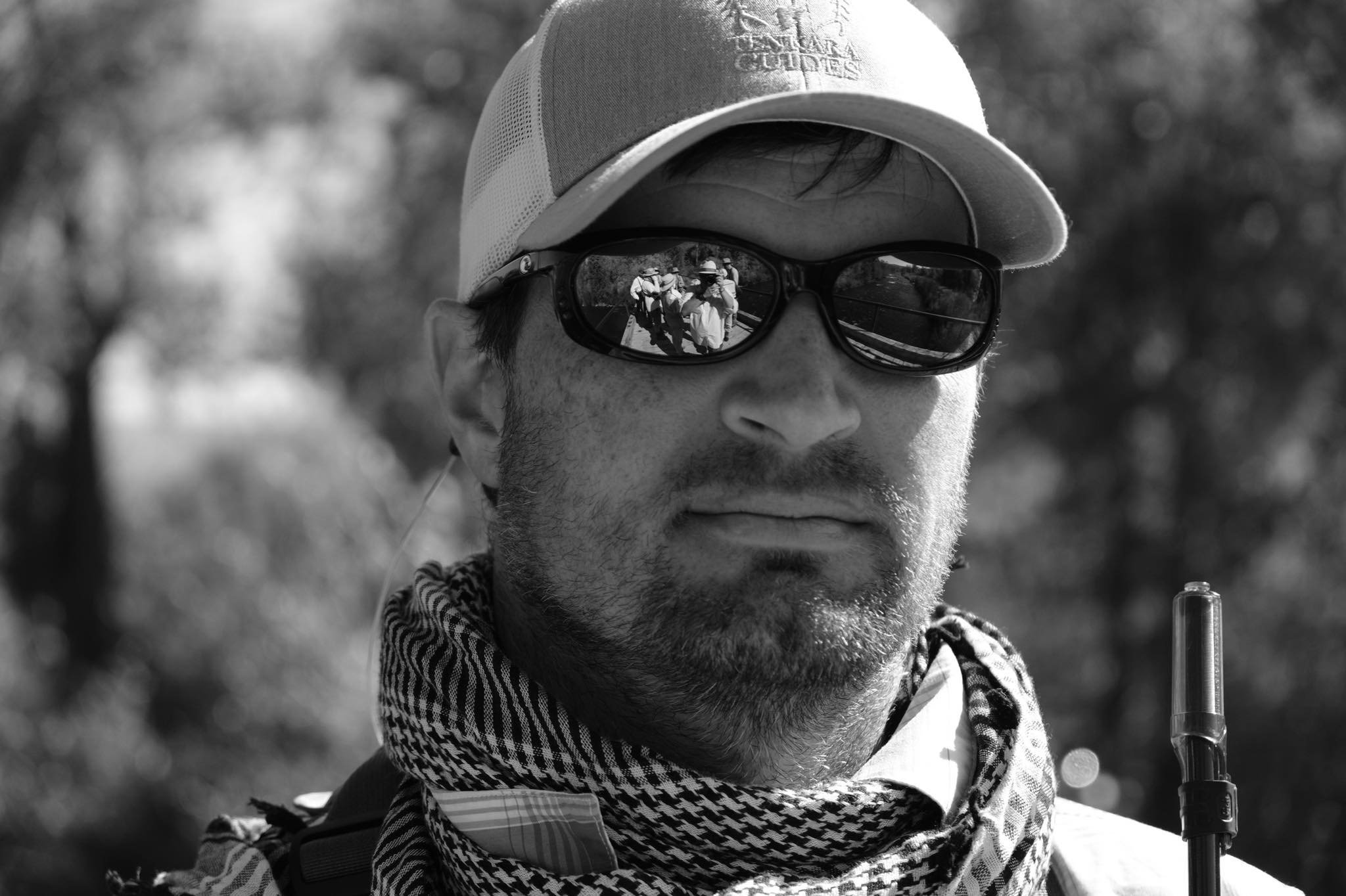
Tenkara Guides is a Tenkara based fly fishing guide service specializing in Utah streams and rivers. We provide a first rate guided experience using unique, effective, easy to learn methods of Tenkara fly fishing perfectly suited to Utah’s waters. Our certified professional guides will design a unique trip customised to your schedule, level of experience, and craving for adventure.
Recent Posts
Active Angler? You need knee pads
I am an active angler. I’m always bounding to the next pool, hopping along the tops of rocks, to get to the next fishy looking spot. I pause at the spot and try to find the best way to approach. I try to minimize my profile and get that perfect cast. Many times I am on my knees.
Active angling is what I love about Tenkara. Wether fishing a small mountain stream in the Wasatch Mts or the wide expanse of the Madison, I’m always trying to get that extra edge.
Waders are not designed for active angling. No matter how many layers of Gore Tex or how big the name of your company, there is not a single wader that can hold up to this kind of abuse. My solution is to put knee pads on the outside.
I tried using removable knee pads. The ones for tactical use are best, but they slide around and bunch up all the fabric at the back of the knee. At the end of the day they drove me nuts. So, I decided to make my own knee pads. Here’s how I did it:
Quick intro summary:
- Find neoprene waders
- Cut out a big piece
- Shape to fit and position you prefer
- Cut out a second piece by tracing the first piece
- Apply Seam Grip to the pad, put it on your waders, cover it with foil, put heavy books on and wait over night
- Seal the edge of the neoprene and wait over night
First, I found an old pair of neoprene waders. This pair had integrated knee pads already sewn on and are still in pretty good condition.
Cut out a big square and put it up to your knees for comparison. I’ll do this with the waders off and also with the waders on. You’ll need to decide how much coverage you want. I find that covering the knee with a little bit of shin protection is the best. The goal is to put on as little as necessary, but still get the protection you want for your body and your waders.
Put a couple of marks where you want things lined up and do a bit of trimming. Test fit, then trim. Test fit, then trim. You want to make sure the fit is exactly what you want. You can even get nerdy and start measuring things. This is the most time labor intensive part if you want a good fit. If you don’t care too much about the fit, then it’s the fastest!
For my knee pads I put the additional integrated knee pad centered around the under side of my knee. Shin guard (or brush guard) goes down to the seam at the gravel guard.
After completing the first knee pad, I traced the outline onto the other knee on the neoprene waders. Two knee pads for two knees.
Simple right? Not quite . . .
My waders have a gusseted knee that made things a little more difficult. I wanted to maintain the gusset so I still had full articulation. The gussets on these waders are not exactly in the same place on each knee, so I matched each pad to the gusset, notched them and marked them with “L” and “R”.
I squared everything up with a plate to make sure all my lines were parallel, and rounded off the corners with a coffee mug.
With the knee pads in their final shape I put them up against my knees to make sure everything was a good fit. I put a couple of marks with a permanent marker so when I got to glueing I’d know where everything was supposed to be.
From here I began the glueing process. I purchased the biggest tube of Seam Grip I could find from my local outdoor store. Don’t go to your fly shop because they only have the 1 oz. sizes and it ends up being pretty pricey. There is some debate about Seam Grip vs. Aquaseal, but I didn’t care to get into it. The important thing is that you use a urethane based glue. Don’t use silicone based glue – it will not hold. Use urethane based glue. I’ve put that in twice because it’s important, and I know based on experience.
Seam Grip also has a few cool things you can use with it, like Cotol 240 to help accelerate the cure to two hours for those of us that are impatient or just really need to go fishing in a hurry.
Lay out your waders as flat as possible in an area that won’t see heavy traffic, like your basement. Put a ton of glue onto the kneepad. You don’t have to go straight to the edge at this point, but make sure you’ve got everything covered pretty good.
When putting your kneepad on with glue be careful and take your time to place it where you want it to prevent the glue from going all over. If you are really a thinker you may want to trace the outline of your kneepad onto your wader then apply the glue to your wader instead of your kneepad.
Commitment point. From here, you can never go back. Your waders will forever have glue on them. Make sure you are comfortable putting neoprene on your fancy waders.
With the kneepad on, cover it with wax paper and put something heavy and flat on it. l used some of my old text books to apply weight over night. I made the mistake of using aluminum foil, and paid for it over the next few days trying to pick off all the foil.
Since my waders are gusseted I glued the shin area first. The next day I glued the knee/thigh area. I used a couple of Therm-a-Rest pads to act as artificial legs, placed something to prop the wader into a bent knee, put on a ton of urethane, covered it with wax paper, and applied weight. Text books wouldn’t work here, so I used an ankle weight and my wife’s rice heat pack to apply pressure as radially as possible.
The next day comes sealing the edges. Apply the glue to the edges, and to make it look pretty, wet your finger and run it along the edge. Wetting your finger helps to prevent the urethane from sticking to your finger.
After the third day of glueing, your waders are ready to rise up again in a new glory. Fall on your knees and be thankful for the work you’ve put in.
Last year’s pads: This year’s pads:
Tools:
Scissors, permanent marker, Seam Grip or AquaSeal, wax paper, heavy books.
Summary (again):
- Find neoprene waders
- Cut out a big piece
- Shape to fit and position you prefer
- Cut out a second piece by tracing the first piece
- Apply Seam Grip to the pad, put it on your waders, cover it with foil, put heavy books on and wait over night
- Seal the edge of the neoprene and wait over night
Tips and tricks:
- Wet your finger to help prevent glue from sticking to you when smoothing out edges
- Us a lot of glue, but remember it will squeeze out when you put the heavy books on
- For extra padding, like under your knee, cut out an oval of neoprene and double up. Let the extra piece cure overnight before glueing the rest of the knee
Happy fishing active anglers,
ERiK
- National MS Society Salt Lake City, Utah Walkathon 2012 Leave a reply
- The Science of Catch and Release Leave a reply
- Tenkara Packs by ZimmerBuilt Leave a reply
- The Utah Killer Bug 3 Replies
- It doesn’t get much simpler than this Leave a reply
- Welcome to the New Site! Leave a reply
- This isn’t going to happen very often 1 Reply
- Filming for KSL Outdoors Leave a reply
- The Ultimate Tenkara Starter Kit 1 Reply